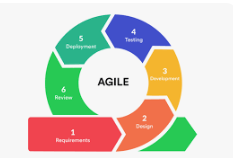
Key Roles of a Business Analyst in Agile Teams
Agile methodology has transformed how organisations build and improve digital solutions. Rapid delivery, continuous improvement, and close collaboration have replaced long documentation cycles and rigid planning.
In this fast-paced environment, the Business Analyst (BA) plays a crucial role in ensuring the team remains aligned with business objectives and user needs.
The Agile Business Analyst is not just a requirement gatherer — they are a value-driven communicator, facilitator, and strategist. Below are the key roles that make them essential to Agile success.
#1 Converting Business Needs Into Clear Requirements
The Business Analyst works closely with stakeholders to understand real challenges, not just what is written in an email or document.
Their responsibilities include: Identifying business goals and user expectations, converting these needs into user stories. They have to clearly understand what the organisation wants, as well coming up with strategies for presenting the idea to the Development Team.
It also includes defining acceptance criteria for successful completion and ensuring requirements remain aligned with business value. This keeps development focused on building solutions that matter.
#2 Managing and Refining the Product Backlog
The backlog is a living document that evolves every sprint.
A Business Analyst supports continuous backlog improvement by splitting large features into smaller, deliverable items. It also includes clarifying details and removing ambiguity, as well as helping the Product Owner prioritise based on value, risk, and urgency.
He has to ensure that every item is “ready” before sprint planning. A clean backlog leads to smoother work execution and higher team productivity.
#3 Acting as a Communication Bridge
Please note that Agile thrives on collaboration. The Business Analyst ensures stakeholders and team members are on the same page by facilitating requirement workshops and discussions, as well as translating technical details for business stakeholders
His responsibilities also include handling conflicting expectations early as well as maintaining transparency throughout the development cycles. You need to know that strong communication prevents misunderstandings and rework.
#4 Focusing on Business Value
Agile is driven by outcomes, not output. The Business Analyst keeps value in focus by constantly checking if development supports business objectives as well as identifying features that bring the highest user benefit.
It also includes validating feature usefulness during reviews and feedback sessions. Their focus ensures that the team invests time only in valuable deliverables.
#5 Supporting Agile Ceremonies
Moreso, Business Analysts actively participate in Agile rituals because every session impacts clarity and alignment. Here are some of the well-established ceremonies in Agile Methodology as well as the role that the Business Analyst is expected to play.
| Ceremony | Business Analyst Contribution |
|---|---|
| Sprint Planning | Clarifies goals and requirement understanding |
| Daily Stand-up | Resolves requirement-related blockers |
| Sprint Review | Validates business value and collects feedback |
| Retrospective | Provides insights on communication & process improvements |
Their presence enables better decision-making throughout the sprint.
#6 Ensuring Quality Through Requirement Clarity
Quality starts with well-understood needs. The BA contributes to testing by reviewing test cases to ensure they reflect acceptance criteria and validating completed work against business needs
He is also involved in identifying usability gaps before final release. Please note that clear requirements significantly reduce defects and costly rework.
#7 Improving Business Processes
You need to understand that great products should also create better workflows. The Business Analyst is expected to analyse the current process landscape to discover pain points and inefficiencies. It also recommends improvements tied to new solutions. He also ensures the final product supports real operational needs.
This role connects software delivery to organisational transformation.
#8 Identifying Risks and Implications
Any change can impact multiple users and systems.
The BA helps teams make informed decisions by assessing business risks related to feature changes. He is charged with understanding downstream effects on other processes as well as recommending corrective or preventive actions.
This proactive view protects the project from avoidable issues.
#9 Advocating for the User
The Business Analyst continuously champions the user perspective. He is charged with ensuring that the product remains intuitive and useful. He is also charged with promoting accessibility and customer experience enhancements, as well as using feedback and data to guide improvements.
The Business Analyst ensures the team builds with empathy, not assumptions.
How Agile Has Redefined the BA Role
| Traditional Business Analyst | Agile Business Analyst |
|---|---|
| Heavy documentation | Continuous collaboration |
| Requirements fixed upfront | Requirements evolve incrementally |
| Focus on project scope | Focus on business value |
| Works separately from the team | Embedded within the Agile team |
The evolution shows a shift from paperwork to people, value, and adaptability.
Conclusion
The Business Analyst is a pivotal member of Agile teams — a connector, clarifier, and value protector. They ensure that each sprint delivers meaningful results by keeping communication open, refining requirements, and championing both business goals and user experience. With the right BA, Agile teams move faster without losing direction.
It’s time to take action.
More Actions To Take:
Is your organisation customer-centric ready? Download the Template now.
Download Your Content Calendar Template
Get My RCCG SOD PDF Year 1- Year 10 on Selar.
Get My Ebook on How To Run Facebook Ads Like a Pro (Do It Yourself)
Get My Ebook on How To Run Tiktok Ads Like A Pro (Do It Yourself Guide).
Do not forget to follow us on Facebook and X(Twitter)
Related posts:


Powered by YARPP.


Leave a Reply